MCP access
Expose governed business context to MCP-compatible clients.
 Agentic Pod
 is a context layer that connects, reconciles and governs your business data across systems — then makes it available to any AI agent.
Designed to connect across systems such as these.
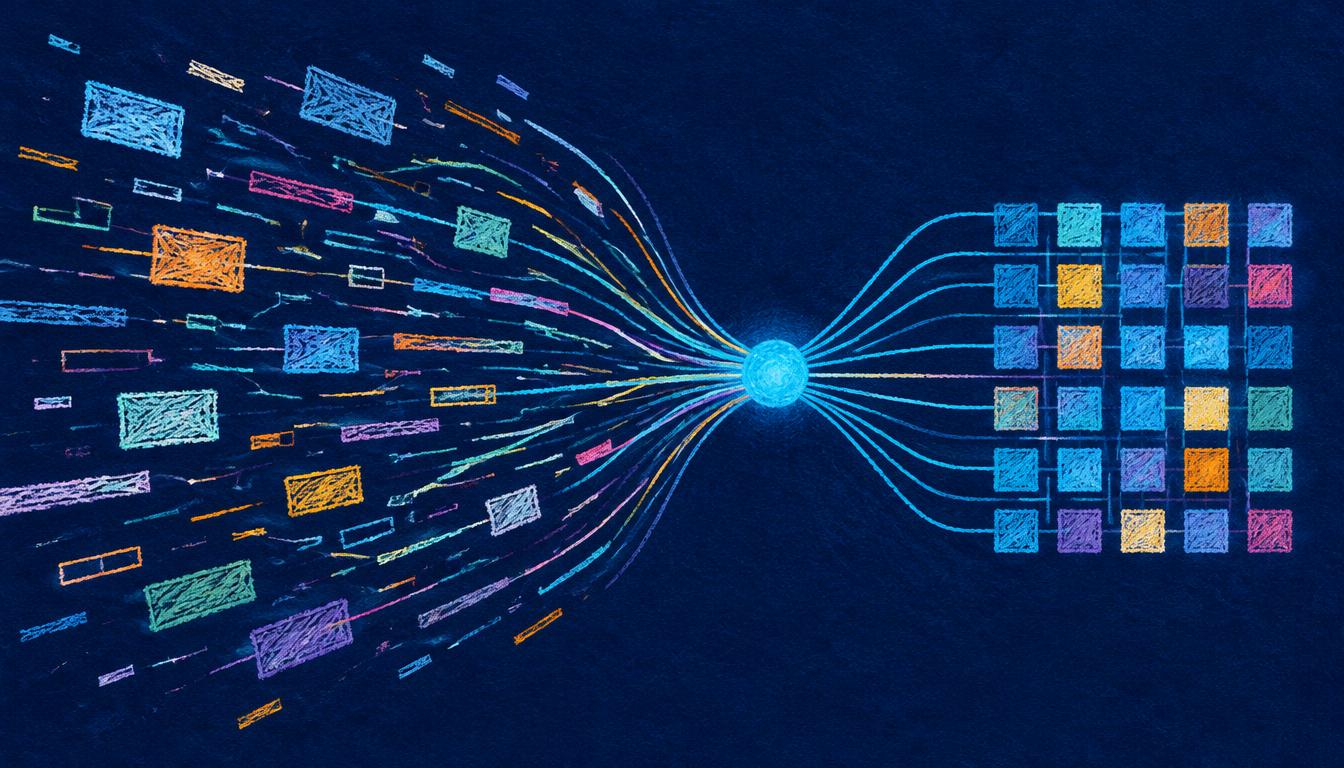
Agentic Pod maps each system’s structure into a shared business model, resolves records that refer to the same entity, and reconciles conflicting values. You get a working context layer in weeks rather than a multi-quarter data programme.
Finance, operations, engineering and commercial data resolve into the same business model, so one pipeline serves every function.
Pull data from APIs, databases, files, documents and email.
Translate each system's fields into a shared business model.
Match records that refer to the same entity across systems.
Flag conflicting values instead of silently choosing one.
Serve reconciled context with permissions and provenance attached.
Connected context. Traceable answers. Agentic Pod shows where information came from, when it was updated, and flags conflicting values across systems.
Relationship-aware · Source-aware · Time-aware · Permission-aware
Connect through the Model Context Protocol or APIs to give Claude, ChatGPT, Copilot or your own agents access to reconciled business context. Every result respects the caller’s permissions and carries its source and timestamp.
Designed to work with MCP-compatible AI clients and custom agents.
Expose governed business context to MCP-compatible clients.
Query the context layer directly from internal applications.
Results respect each caller's defined access boundaries.
Every value carries its source and timestamp.
Run the context engine and supported open-weight models on infrastructure your organization controls. Change models without rebuilding the context layer.
Designed to connect across systems such as these.
A short walkthrough of cross-functional context intelligence applied to real estate — the first vertical context model we built. Property, accounting, construction, design, spreadsheets and email resolved into one business context. The systems differ by industry. The problem does not.
The questionA cross-functional question nobody can answer quickly.
The Context EngineHow separate systems resolve into one business context.
The answerWhat changed, why, and the evidence behind it.
The same pipelines underneath every vertical context model.
Agentic Pod starts from a vertical context model — the entities, relationships and rules that match how your industry operates — and adapts it to your systems. You start from a working model rather than a blank schema.
Parts, BOMs, suppliers, quality events
Projects, commitments, changes, costs
Sites, entities, consolidated reporting
Vertical models shape the context. Your systems and your rules complete it.
Especially where growth, acquisitions and separate operating teams have left every site or business unit on different systems, spreadsheets and document repositories.
Operations · Finance · Project & delivery · Data & IT · Executive
Start with one hard questionAgentic Pod is a context layer that connects, reconciles and governs your business data across systems — then makes it available to any AI agent. It sits underneath the AI tools your teams already use.
Integration platforms move data between systems. Agentic Pod maps each system's structure into a shared business model, resolves records that refer to the same entity, and flags conflicting values with their sources and timestamps intact. You get meaning, not just movement.
You get a working context layer in weeks rather than a multi-quarter data programme. A POC starts with 3–5 data sources and one cross-functional question or workflow.
Agentic Pod connects across ERP and finance, CRM and commercial, operations and project, engineering and design, spreadsheets, knowledge and communications, and data systems. It pulls data through APIs, databases, files, spreadsheets, documents and email.
You run the context engine and supported open-weight models on infrastructure your organization controls. Source attribution and access boundaries are preserved, so your business context stays under your control.
You connect through the Model Context Protocol or APIs to give MCP-compatible AI clients and custom agents access to reconciled business context. Every result respects the caller's permissions and carries its source and timestamp.
A POC covers 3–5 data sources, one Context Engine and one cross-functional question or workflow — one question that spans your systems. You test it using your real business data.
[PLACEHOLDER — team to add founders, background and company details. Do not publish until filled in.]